OpenAI Launches GPT-Live: Making Conversations with ChatGPT Feel Truly Human
OpenAI Launches GPT-Live: A New Chapter for Conversational AI OpenAI has taken another significant step in conversational artificial intelligence with the intr
- by Aayush Ladha 2026-07-14 12:28:52
OpenAI has introduced GPT-Live, a major step toward making AI conversations feel more natural, responsive, and human-like. Instead of interacting with an AI through delayed text exchanges, GPT-Live enables users to have fluid, real-time conversations that closely resemble speaking with another person. The feature builds on OpenAI's multimodal capabilities, allowing ChatGPT to understand voice, context, interruptions, and conversational flow more effectively than previous versions.
The launch reflects a broader shift happening across the AI industry. Companies such as Google, Anthropic, Microsoft, Meta, and xAI are investing heavily in conversational AI that goes beyond answering questions. The race is now centered on creating AI assistants capable of understanding intent, maintaining context over longer discussions, and becoming practical companions for work, learning, creativity, and everyday life.
With GPT-Live, OpenAI is positioning ChatGPT as more than a chatbot. It is evolving into an interactive AI assistant designed for continuous, real-time communication. The announcement also signals how quickly AI interfaces are moving away from traditional typing toward natural voice interactions.
OpenAI Launches GPT-Live: A New Chapter for Conversational AI
OpenAI has taken another significant step in conversational artificial intelligence with the introduction of GPT-Live. The feature is designed to make interactions with ChatGPT feel smoother, faster, and much closer to natural human conversations.
Unlike traditional chatbot experiences where users type a message and wait for a response, GPT-Live focuses on continuous communication. It supports natural pauses, interruptions, follow-up questions, and conversational memory, allowing discussions to flow more organically.
This represents a major evolution in how people interact with AI. Instead of simply asking isolated questions, users can engage in ongoing conversations that feel more dynamic and context-aware.
Why GPT-Live Matters
For years, AI assistants have improved in terms of knowledge and reasoning, but conversations often felt mechanical. Users had to repeat information, rephrase questions, or wait between responses.
GPT-Live addresses many of these limitations by emphasizing real-time interaction.
Some of the key improvements include:
- More natural voice conversations
- Faster response times
- Better understanding of conversational context
- Reduced need to repeat previous information
- Improved handling of interruptions
- More engaging user experience
These changes may appear subtle individually, but together they significantly improve how users communicate with AI.
A Shift from Chatbots to AI Companions
The launch of GPT-Live reflects a larger industry trend.
AI is no longer being developed solely as a search tool or writing assistant. Instead, companies are building digital companions capable of assisting throughout the day.
Users increasingly rely on AI for:
- Brainstorming ideas
- Learning new skills
- Coding assistance
- Business planning
- Language practice
- Personal productivity
- Creative writing
- Research
Real-time conversation makes each of these experiences more efficient because communication becomes effortless.
Rather than treating AI as software, users begin interacting with it more like a knowledgeable assistant.
How GPT-Live Compares with Other AI Platforms
The conversational AI market has become highly competitive.
Google continues expanding Gemini with voice capabilities integrated across Android devices and Google Workspace. Its advantage lies in deep integration with Google's ecosystem.
Anthropic
Claude focuses on thoughtful conversations, document analysis, and long-context reasoning. While known for detailed responses, its conversational experience continues to evolve.
Microsoft
Microsoft integrates OpenAI technology across Windows, Microsoft 365, and Copilot experiences, bringing conversational AI into workplace productivity.
Meta
Meta AI is increasingly available across WhatsApp, Facebook, Messenger, and Instagram. Its strength comes from billions of existing users.
xAI
Grok emphasizes real-time internet awareness and conversational personality while expanding across X.
OpenAI's GPT-Live differentiates itself by combining advanced reasoning with fluid, natural conversations, creating an experience that feels less like using software and more like speaking with an assistant.
Impact on Everyday Users
GPT-Live has practical applications across multiple user groups.
Students
Students can ask follow-up questions naturally, clarify difficult topics instantly, and engage in interactive learning sessions.
Instead of reading static answers, they can discuss concepts until they fully understand them.
Professionals
Business users can brainstorm marketing campaigns, review documents, prepare presentations, summarize meetings, and solve workplace challenges through ongoing conversations.
This creates a faster workflow compared to repeatedly typing prompts.
Developers
Developers often work through complex coding problems interactively.
GPT-Live enables continuous debugging discussions, architecture planning, code reviews, and learning new frameworks with minimal interruption.
Content Creators
Writers, YouTubers, marketers, and creators benefit from natural brainstorming sessions.
Rather than generating one answer at a time, GPT-Live supports collaborative idea development.
The Technology Behind GPT-Live
While OpenAI has not publicly disclosed every technical detail, GPT-Live builds upon several advances in multimodal AI.
These include:
- Real-time speech understanding
- Improved language generation
- Better contextual memory
- Lower response latency
- Enhanced conversational turn-taking
- Smarter interruption handling
Together, these capabilities reduce friction and make conversations feel considerably more natural.
Privacy and Responsible AI
As conversational AI becomes increasingly personal, privacy becomes even more important.
Voice interactions naturally involve more contextual information than text conversations.
OpenAI continues emphasizing user controls, responsible AI development, safety research, and transparency around how AI systems operate.
Maintaining trust will remain essential as users rely on conversational AI for increasingly important tasks.
Business Implications
GPT-Live is likely to influence multiple industries.
Customer support platforms may adopt more conversational AI experiences.
Education technology companies could build interactive tutoring systems.
Healthcare providers may explore AI assistants for administrative support.
Enterprises may integrate live conversational AI into internal workflows.
Startups building AI products will also face higher expectations regarding user experience.
Natural conversation is quickly becoming a competitive advantage rather than a premium feature.
What This Means for the AI Industry
GPT-Live highlights a broader transformation.
The industry is moving beyond measuring AI purely by benchmark scores or model size.
Instead, companies are competing on usability.
The future of AI depends not only on intelligence but also on communication.
Users expect AI to understand context, remember previous discussions, respond quickly, and communicate naturally.
GPT-Live reflects this changing expectation.
Challenges Ahead
Despite the excitement, several challenges remain.
Real-time AI conversations require significant computing resources.
Voice interactions also introduce questions around accessibility, privacy, multilingual support, and reliability.
AI models must balance speed with accuracy while maintaining safety.
OpenAI and its competitors will continue refining these systems as adoption grows.
Market Outlook
Industry analysts expect conversational AI adoption to accelerate over the next few years.
Businesses increasingly view AI assistants as productivity tools rather than experimental technology.
Consumers are also becoming more comfortable using voice-first interfaces.
As hardware improves and AI models become more efficient, real-time conversational experiences like GPT-Live could become the standard way people interact with digital services.
The launch also intensifies competition across the AI landscape, encouraging faster innovation from every major technology company.
Conclusion
GPT-Live marks another important milestone in the evolution of conversational AI. By making interactions faster, more natural, and easier to maintain, OpenAI is moving ChatGPT closer to becoming a true digital assistant rather than a traditional chatbot. As competitors continue advancing their own AI platforms, users stand to benefit from better experiences, smarter assistants, and more practical ways to integrate AI into everyday work and life. GPT-Live is not simply a new feature; it reflects the direction in which conversational AI is heading and offers a glimpse of how humans may interact with intelligent systems in the years ahead.
POPULAR POSTS
5 Best llm Brand Visibility Tools in 2026
by Aakash Ladha , 2026-08-03 10:40:13
What Is LLM Visibility? A Simple Guide to Checking Your AI Visibility
by Aakash Ladha , 2026-07-15 11:44:33
Otobot Technologies: Driving the Future of Automotive Innovation
by Aayush Ladha, 2026-07-06 12:06:39
Speakers United Concludes Its Biggest Debate Camp Yet 80 Students, Zero AI Assistance
by Aayush Ladha, 2026-07-01 11:26:25
The Agentic Revolution: Why Salesforce Is Betting Its Future on AI Agents
by Shan, 2025-11-05 10:29:23
OpenAI Offers ChatGPT Go Free in India: What’s Behind This Big AI Giveaway?
by Shan, 2025-10-28 12:19:11
Zoho Products: Complete List, Launch Years, and What Each One Does
by Shan, 2025-10-13 12:11:43

Follow on Insta
RECENTLY PUBLISHED

How Praveen Gowdru Went From Building VMEDO To Launching Tez Health And Why He Betting On Home Healthcare
- by Aakash Ladha , 2026-07-01 11:01:27
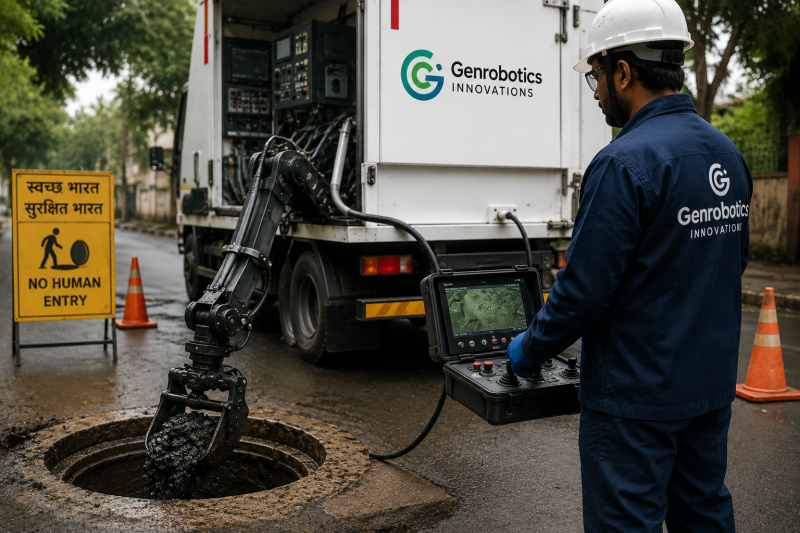
How a Kerala Startup is Using Robots to Clean Sewers and Manholes
- by Aakash Ladha , 2026-07-14 12:14:26

Luxemettle Redefining Indias Jewellery Market With Personalized Craftsmanship and Story Driven Design
- by Aakash Ladha , 2026-07-14 12:07:23


 Subscribe now
x
![logo]()